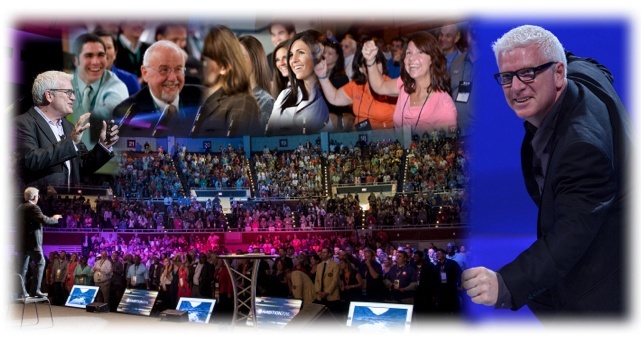


Some speeches pass through a room and vanish. On the other hand, there are those who stay even after the applause, after the conference is over. You recollect a phrase, a story, a moment that made you experience something real. This is what separates a speech from a keynote that drives real engagement and lasting impact.
In this blog, we will discuss what contributes to a keynote being remembered throughout the entire event. We will also talk about how a top motivational speaker for financial service audiences creates such a deep emotional experience with his unique method.
How Does a Keynote Speaker Capture and Keep Attention?
Great keynotes do not lead with facts or slides but with a connection instead. The audience has to care first before they can take in anything.
In professional settings, especially in industries like finance, people arrive with full minds. They've been thinking about quarterly results, compliance, and client calls. Today's financial professionals face real pressures: regulatory burnout, ongoing remote team disengagement, and rapid fintech disruption reshaping their roles. To connect here, the first minute matters most. Some of the effective ways of opening can be a thought-provoking question, a well-known story, or a strong statement that changes the energy of the room.
Attention is also about rhythm. When a speaker speaks too fast, the audience races to catch up. When the pace drags, minds drift. The trick lies in giving space for reflection while keeping curiosity alive. Humor helps, too. It lowers resistance and brings warmth to technical topics.
In financial services, where numbers dominate, emotion often takes a back seat. Yet emotion is the glue that makes information stick and inspires action. A well-crafted keynote speaker speech balances logic with feeling. It turns ideas into experiences you can remember, not just notes you write down.
What Are the Core Parts of a Winning Keynote Speaker Speech?
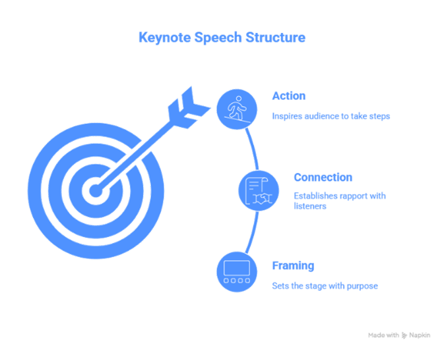
Every strong keynote has a rhythm with a clear beginning, an engaging middle, and a finish that stays in the air even when the speaker leaves the stage.
Opening – Framing the Why
The first few minutes set the tone for everything that follows. The audience should instantly know why this talk matters. This could mean framing a shared challenge, revealing an overlooked truth, or posing a question that hangs in the room. The speaker's goal is to invite attention, not demand it.
A simple opening story works best when it mirrors what the audience faces daily. For a group of financial advisors, that might mean a story about risk, timing, or decisions under pressure. It signals that the speaker understands their world apart from just their industry.
Middle – Building the Connection
This is where the keynote breathes. Here, storytelling carries the message forward. Facts come alive when they're linked to human experience. Instead of quoting statistics about performance or engagement, a good speaker tells what those numbers mean through people and their choices.
The middle section often balances information with feeling. It can include humor, relatable challenges, and moments of reflection. The goal isn't to impress the audience with knowledge but to invite them to see their own story in the message. When that happens, a room full of individuals starts thinking as one team.
Closing – Turning Energy into Action
An ending should be more than a summary. It's the part where energy shifts from listening to doing. Great closings bring clarity and conviction together. They often circle back to the opening idea, but with a new meaning. The final words should leave people ready to move, not just satisfied.
A line, a call to action, or a reminder of purpose can stay with people for weeks. That's how you know the speech worked, when it changes what happens after the applause.
How Vince Poscente Brings This Structure to Life
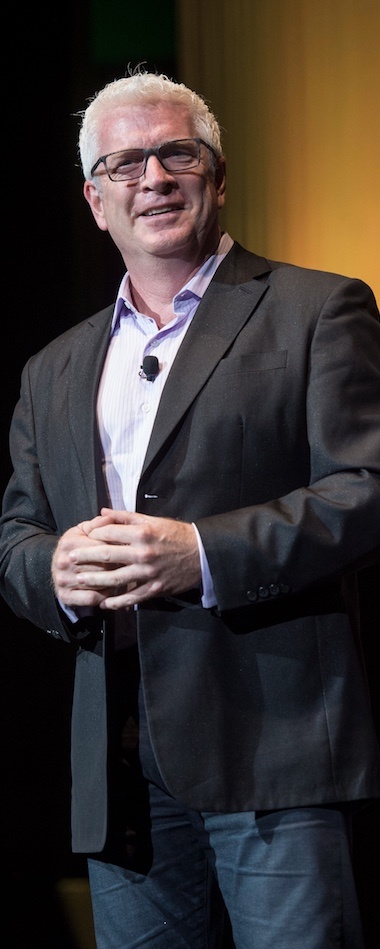
Vince Poscente understands this rhythm deeply. As a former Olympian and New York Times bestselling author, he has lived through pressure, teamwork, and fast decisions, experiences that shape the way he speaks to business audiences.
In his financial services keynotes, Vince connects industry challenges such as regulatory complexity and rapid market change with practical strategies for speed, clarity, and alignment. He blends humor, story, and energy not as buzzwords, but as tools to make ideas feel personal and relatable. His talks create moments when listeners see how their daily work moves a bigger goal forward.
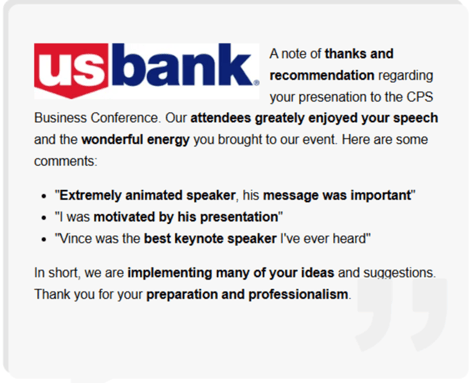
Carol Batzli Barkley, VP of Marketing & Communications at U.S. Bank, reflects this impact: A note of thanks regarding your presentation at the CPS Business Conference. Our attendees greatly enjoyed your speech and the exceptional energy you brought to our event.
Why Does a Strong Speech Matter More Than Ever in Financial Services?
In financial services, pressure never stops. Markets shift continuously, regulations evolve, and expectations rise. Over time, these conditions can dull motivation and engagement.
According to Culture Amp's January 2025 Financial Services Benchmark Report, while 72% of financial services employees report being engaged, 18% are actively looking for new jobs, and 23% feel their compensation is unfair, all of these are clear friction points that threaten retention and morale. A keynote speech is a strategic opportunity to address such challenges and reset how teams see their work amid ongoing disruption and fatigue.
A great keynote reconnects teams with purpose. It reminds them that success isn't just about numbers but about meaning and shared effort. For leadership teams, it can reignite vision. For front-line staff, it can renew confidence.
From banks to insurance firms, clients report cultural shifts after keynote speaker speech sessions. By translating organizational goals into simple, relatable stories, these kinds of presentations provide clarity and focus when change scatters attention.
Conclusion
A winning keynote speaker speech is both about art and preparation. The structure guides, the story connects, and the delivery brings it to life. Together, they shape how people think and act long after the event.
When planning your next conference or team meeting, focus on the role your message plays in driving clarity, connection, and motivation. The right words, delivered with conviction, can shift energy and alignment across an entire organization.
Vince Poscente’s keynotes demonstrate how speed without direction leads to chaos, while direction with speed creates success, which is a valuable lesson for financial services leaders steering constant change.
FAQs
Q1: How long should a keynote speaker's speech last?
Most impactful keynotes run between 45 and 60 minutes, long enough to build a connection but short enough to stay focused.
Q2: What makes a keynote different from a presentation?
A presentation informs. A keynote inspires, connecting strategy with emotion to move people toward a goal.
Q3: How important is storytelling in a keynote?
Storytelling gives context to facts. It helps people remember and relate to the message.
Q4: Can a keynote speaker's speech fit a regulated industry like finance?
Yes. The best speakers tailor messages to compliance and culture without losing spark.
Q5: How does Vince Poscente customize his speeches?
He studies each organization's priorities, audience makeup, and tone, building a message that fits their goals and challenges.