
Vince Poscente

Recent Posts

The Real Questions to Ask Before Booking the Best Keynote Speaker for Your Event

Posted by Vince Poscente on Fri, Aug 14, 2026 @ 02:10 AM

You've narrowed the shortlist down to three names. Each one looks credible on paper: solid reels, a few recognizable client logos, a fee that fits the budget. So you do what most planners do next. You ask about cost. You ask about availability. You may ask if they can do a Zoom call before signing anything.

And then the event happens, and one of two things occurs. Either the room lights up, and people are still talking about it weeks later, or it falls flat, and you spend the drive home wondering what you missed in the vetting process.

The problem isn't that you asked the wrong person the wrong things. It's that "how much" and "when are you free" were never designed to predict what actually happens on stage.

Why Cost and Availability Tell You Almost Nothing

Cost and availability are logistics questions. They tell you whether a booking is possible. They tell you nothing about whether it will work.

Two speakers can charge the same fee and be free on the same date, and one will read a room in real time while the other recites a fixed script regardless of what's actually happening in front of them. The gap between those two outcomes isn't visible on an invoice. It only shows up once you're standing at the back of the ballroom watching it unfold live.

If you want to find the best keynote speaker for your specific event, the questions that matter are the ones that predict behavior under real conditions, not the ones that confirm a transaction can happen.

The Five-Question Filter for Booking the Best Keynote Speaker

Here are the five questions worth asking before you sign anything. Each one is designed to surface something a highlight reel can't show you.

1. How Do You Define a Successful Talk for This Audience?

This question does more work than it looks like it should. A speaker who answers with something specific, tied to your industry, your goals, or the outcome you actually need, is thinking about your event as a distinct problem to solve. A speaker who gives a generic answer about "leaving people inspired" is telling you they haven't thought past the booking yet.

2. Can You Tell Me About a Time You Had to Adjust Mid-Session?

Every experienced speaker had a session that didn't go according to plan. The ones worth booking can describe exactly what happened and what they changed in real time. A vague or defensive answer here is one of the clearest warning signs you'll get in the entire vetting process.

3. What Do You Need From Us to Prepare?

The best keynote speaker for your event will ask you almost as many questions as you ask them. They'll want to understand your audience, your industry, and what's happening internally that makes this event matter right now. If a candidate has no real prep requests beyond a stage diagram and an AV list, that's worth noting.

4. How Do You Customize Your Content for Different Industries or Audiences?

A speaker who has genuinely adapted their material across different sectors, whether that's leadership teams, sales forces, healthcare organizations, or safety-focused industries, can usually describe specific ways their message shifts depending on the room. This is a strong signal of range versus a single fixed talk delivered on repeat.

5. What Happens After the Event Ends?

The strongest keynotes don't end when the applause does. Ask whether there's a follow-up resource, a summary for attendees, or any way the ideas keep working after everyone goes back to their desks. A speaker with a real answer here is thinking about impact, not just the hour on stage.

Where Vince Poscente Fits Into This Filter

Vince Poscente is a strong example of what effective answers to these five questions look like in practice. As an Olympian, New York Times bestselling author, and Hall of Fame speaker, his background covers a genuinely wide range of industries, including leadership, sales, healthcare, and safety, which means his approach to Question 4 above isn't theoretical. He's had to build that range for real.

His delivery style is built around actionable insight rather than a single fixed script, and it's shaped directly by his own competitive background as an Olympic speed skier, where reading conditions and adjusting instantly wasn't optional. That instinct carries onto the stage. When a room's energy shifts mid-session, that same trained ability to recalibrate without losing momentum is exactly the kind of answer Question 2 above is designed to surface.

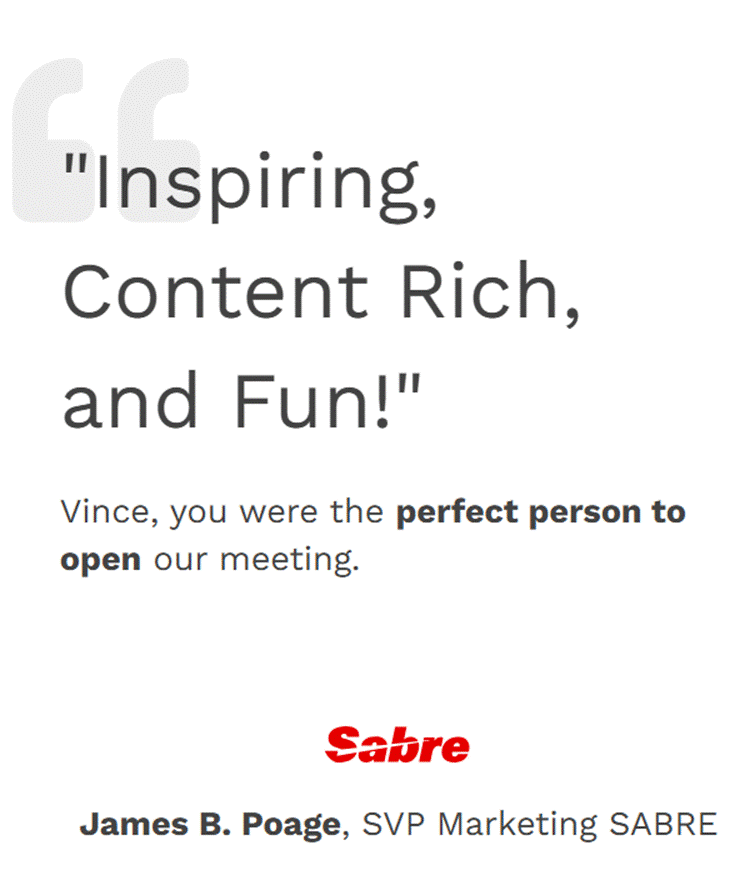
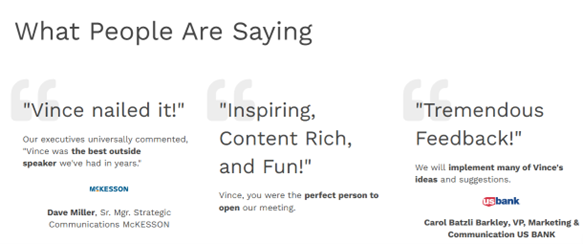
One of his past clients, James B. Poage, SVP Marketing at Sabre, put it simply after booking Vince to open a company meeting: "Vince, you were the perfect person to open our meeting." That's the kind of specific, outcome-based feedback worth listening for when you're checking references for any speaker on your shortlist, not just a general compliment about energy.

What You're Tempted to Ask vs. What Actually Predicts a Good Outcome

Tempting Question

What It Tells You

Better Question

What It Actually Predicts

How much do you cost?

Whether it fits your budget

How do you define success for this audience?

Whether they understand your goals

Are you available on our date?

Whether a booking is possible

Can you describe a time a session didn't go to plan?

How they handle real pressure on stage

Can you send a reel?

How you look on your best night

What do you need from us to prepare?

Whether they treat this as a custom event

Do you have testimonials?

General approval from past clients

How do you customize for different industries?

Actual range versus one fixed talk

Can we do a call beforehand?

Basic professionalism

What happens after the event ends?

Whether impact is designed to last

Notice that the tempting questions aren't wrong to ask. They're just not enough on their own. The right approach is asking both, but weighting your decision on the second column.

How to Actually Evaluate the Answers You Get

Asking the right questions only helps if you know what to listen for in the response.

Vague answers are the biggest red flag across all five questions. A speaker who can't get specific about how they define success, or can't recall a real moment of adjusting mid-talk, is likely working from a fixed script rather than a genuine read of the room. Specificity is the signal you're looking for, not polish.

It's also worth watching how a candidate responds to being asked these questions in the first place. The best keynote speaker for a high-stakes event usually welcomes this kind of scrutiny, because they've been asked it before and have real answers ready. Defensiveness or vague reassurance at this stage tends to predict the same pattern at this stage.

If you want to see this range in action before making a final call, Vince's keynote topics page and video library are useful ways to compare how his message shifts across different audiences, from leadership-focused sessions to sales-specific keynotes, rather than relying on a single highlight clip.

FAQs

Q1. What's the single most important question to ask before booking a keynote speaker?
Asking how they define a successful talk for your specific audience tends to reveal the most, since it shows whether they're thinking about your event as unique or reciting a general answer.

Q2. Should I still ask about cost and availability?
Yes, those questions are still necessary logistics. They just shouldn't be the questions that decide who you book. Use them to build your shortlist, then use the five questions above to narrow it down.

Q3. How do I know if a speaker's answer about handling a difficult session is genuine?
Genuine answers tend to be specific: what happened, what they noticed, and exactly what they changed. Vague or overly polished answers are usually a sign that the speaker hasn't actually had to adapt much.

Q4. Does the best keynote speaker for my event need direct experience in my industry?
Not always, but they should be able to describe how they'd adapt their material to it. Speakers with a track record across multiple industries, like leadership, sales, healthcare, and safety, tend to have a clearer answer here.

Q5. What should happen after I've asked all five questions?
Compare answers across your shortlist side by side, not just against a checklist. The candidate who gives the most specific, confident answers across all five is usually the safer bet, regardless of who has the flashiest reel.

Conclusion

The questions most planners default to, cost and availability, only tell you whether a booking is logistically possible. They say nothing about what will actually happen once your audience is in the room.

The five questions above are built to surface exactly that: how a speaker defines success, how they handle pressure, what they need from you, how far their range actually extends, and whether their impact is designed to last past the applause.

If you're building a shortlist and want to see how these questions play out with a speaker who has genuinely worked across leadership, sales, healthcare, and safety audiences, check Vince Poscente's availability and fees or call 214.335.0856 to talk through what your event actually needs.

How a Professional Keynote Speaker Should Handle a Room That Isn't Responding

Posted by Vince Poscente on Fri, Aug 14, 2026 @ 02:07 AM

You've seen it happen. Fifteen minutes into the keynote, the laughs get thinner. Arms start crossing. A few phones light up under the table. The event planner in the back row feels their stomach drop because this is the session they fought for budget approval on, and right now it isn't landing.

Every planner who has booked a professional keynote speaker has sat through this moment at least once, wondering if the room will come back or if the next forty minutes will just get quieter.

Why a Flat Room Isn't the Real Problem

A flat room by itself doesn't mean the speaker has failed. Audiences go quiet for reasons that have nothing to do with the content. A late lunch. A previous session that ran long. A room that's too cold or too warm. Sometimes the group is simply tired, and no opening line is ever going to fix that in the first ninety seconds.

The real problem isn't the flat moment. It's what the speaker does in the next sixty seconds after they notice it. A professional keynote speaker who freezes, speeds up out of nervousness, or pretends not to notice will lose the room for good. One who reads the shift and adjusts without breaking stride can bring the energy back before most of the audience even realizes it dipped.

This is the difference event planners are actually paying for, even if they don't always know how to describe it in a speaker brief.

What Separates a Professional Keynote Speaker From an Amateur in That Moment

Most speakers can deliver a polished opening. Fewer can handle the fifteen-minute mark when energy dips and the plan on the page stops matching the room in front of them. This is where Vince Poscente brings something most speakers can't fake: an Olympic-trained relationship with recovery.

Vince spent years as a competitive speed skier, a sport where one flinch or one late reaction at high speed ends the run. Athletes at that level don't get the luxury of pausing to think about what went wrong. They train a specific skill: noticing the shift instantly and adjusting mid-motion, without losing control. That same instinct is what separates a keynote speaker who can rescue a quiet room from one who simply hopes it fixes itself.

It isn't about having more energy than the room. It's about reading the room accurately and responding with precision instead of panic.

The Four-Point Recovery Framework

When a room goes flat, the speakers who recover well tend to follow a similar internal pattern, whether or not they'd describe it this formally.

Here's what that pattern looks like, broken down into four parts:

1. Read the Room Without Panicking

The first skill is noticing early, before the dip becomes obvious to the whole room. A speaker watches for small signals: fewer eyes making contact, slower laughs, more phone checks. Catching this at minute twelve instead of minute twenty-five makes the recovery far easier. Panic at this stage almost always makes things worse, because audiences can feel a speaker's discomfort even faster than they notice their own.

2. Reset the Pace

A common mistake is trying to fix a flat room by talking faster or louder, as if volume alone can force attention back. It rarely works. The better move is slowing down, shortening a sentence, or dropping in a short pause. A confident pause signals control. It tells the room, without saying it out loud, that the speaker is still steering the session.

3. Use Silence as a Tool, Not a Threat

Most speakers are taught to fear silence. A seasoned speaker treats it differently, using a deliberate pause to pull attention back rather than filling every second with words. Silence after a key point often does more work than another five sentences explaining it.

4. Return to the Core Message

When energy dips, the instinct is often to add something new to win the room back: a joke, a tangent, an extra story. The stronger move is usually the opposite. Returning to the single core idea of the talk, restated simply, tends to re-anchor a distracted room faster than anything unfamiliar.

Standard Reaction vs. Professional Keynote Speaker Reaction

Moment

Standard Reaction

Professional Keynote Speaker Reaction

Energy starts to dip

Talks faster to fill the gap

Slows down and shortens the point

Audience goes quiet

Fills the silence nervously

Let's pause to do the work

A joke falls flat

Apologizes or over-explains it

Moves on without drawing attention to it

Ten minutes of low energy

Adds new material to compensate

Returns to the core message and simplifies

Session ends flat

Rushes the closing

Rebuilds momentum before the final minute

This is the kind of composure event planners remember long after the event, even if they can't always name what they saw happen on stage.

How Vince Poscente's Background Shapes This Composure

Vince Poscente's approach to a flat room isn't a trick he learned from a speaking coach. It comes directly from an Olympic career built on split-second recovery, and it shows up in how his keynotes are described on his own site: energetic, innovative, and powerful, three qualities that only mean something if a speaker can sustain them even when a room resists.

His talks are also built around a clear idea: "Do what the competition isn't willing to do." Staying composed when a room goes quiet is exactly that kind of unglamorous discipline. It's not the part of a keynote that gets applause on its own, but it's the part that determines whether the rest of the session works.

Vince's keynote topics reflect this same principle in different forms:

  • FULL SPEED AHEAD — Built for high-energy openings and closings, where momentum has to be earned, not assumed.
  • CONFIDENCE ON COMMAND — For moments when results-at-speed matter most, including recovering composure live on stage.
  • WINNING MINDSET — Practical, repeatable takeaways rather than a one-time energy spike.
  • PEAK PERFORMANCE SAFETY — Proof that his frameworks hold up even in serious, high-stakes rooms, not just high-energy ones.

If you want to see this composure in action rather than just read about it, Vince's event videos show how he holds a room's attention across a full session, not just the first five minutes.

When Should You Ask About This Before Booking?

Most event planners don't think to ask a candidate speaker how they handle a flat room until after they've already had a bad experience with one. It's worth asking earlier.

Before booking any keynote speaker, ask them directly: what do you do when the energy in the room isn't matching your opening?

Their answer tells you more about how the actual event will go than any highlight reel can. A speaker who has a real answer, grounded in something they've lived through, is a very different bet than one who says "that's never happened to me."

If you're weighing this for an upcoming conference, association meeting, or franchise convention, it's worth a direct conversation. Vince and his team also offer bulk book discounts for events bringing his book to attendees, which is worth asking about while you're comparing options for your corporate event.

FAQs

Q1. What should I look for if I'm worried my audience might be hard to energize?
Ask any candidate speaker how they've handled a flat room in the past. A professional keynote speaker should be able to describe a specific moment and what they changed, not just reassure you it won't happen.

Q2. Is a flat room usually the speaker's fault?
Not always. Timing, room temperature, and a heavy schedule earlier in the day can all flatten energy before the speaker even begins. What matters is whether the speaker can recover it.

Q3. How fast should a good speaker recover a low-energy room?
Experienced speakers usually notice within the first few minutes and adjust immediately, often before most of the audience consciously registers that anything has shifted.

Q4. What's the best way to evaluate this before signing a contract?
Watch the full-length video, not just a highlight reel, and ask the speaker directly about a time a room didn't respond the way they expected.

Conclusion

A quiet room isn't a red flag on its own. What it reveals is whether the speaker you booked can recover without losing the audience for good. That composure, built the same way an athlete trains for split-second recovery under pressure, is exactly what separates a forgettable session from one people are still talking about weeks later.

If your next event needs a professional keynote speaker who can hold a room even when it doesn't respond the way you hoped, book Vince Poscente or call 214.335.0856 to talk through what your audience actually needs.

Speed, Focus, and the Olympic Mindset: Is a Sports Keynote Speaker the Spark Your Team Needs?

Posted by Vince Poscente on Tue, Apr 07, 2026 @ 02:15 AM

Teams rarely fail because they aren't working hard enough. In most corporate environments, the lights stay on late, calendars are packed, and the volume of emails never tapers. Yet, many leaders find themselves facing a frustrating paradox: despite the high level of activity, progress has stalled. The collective energy of the office feels heavy, and the sharp focus that once defined the organization has begun to blur into a haze of just getting through the week.

To break the cycle of stagnation, organizations need a different lever. They need a shift in mindset, a transition from a culture of effort to a culture of execution. This is where a sports keynote speaker provides a unique advantage. By drawing on the high-stakes, high-precision world of elite athletics, these speakers offer a framework for performance that is often missing from traditional business consulting.

Why Traditional Motivation Often Fades?

A professional team doesn't need to be told to care about their work; they already do. What they need is a method for maintaining that care when the pressure is mounting and the deadlines are tight. Generic inspiration falls short because it doesn't account for the grit required to perform when things go wrong.

A sports keynote speaker brings a level of lived credibility to the stage. They don't just talk about overcoming obstacles as a theoretical concept; they speak from the perspective of someone who has had to perform in front of the world, where the margin for error was measured in milliseconds. This difference in perspective transforms a speech into a performance blueprint. When a speaker shares lessons from the arena, the audience listens differently. The parallels between a high-stakes race and a high-stakes sales quarter become undeniable.

High-Performance Strategies from Vince Poscente

Not all speakers are created equal. While many can tell a compelling story, few can translate that story into a repeatable system for a business audience. Vince Poscente stands out in this space because his message is rooted in the extreme world of Olympic speed skiing, a sport where focus isn't just a strategy; it's a survival mechanism.

Vince Poscente teaches teams how to find alignment within that blur. By simplifying the path to an objective, he helps teams move past the friction of daily operations and toward the clarity of elite execution.


Picture3-1


The core of this approach is the realization that speed requires more than just moving fast. It requires a mental discipline that allows an individual to remain calm while the environment around them accelerates. For a leadership team or a sales force, this means learning how to make faster, more confident decisions without sacrificing precision.

The Bridge Between Athletics and the Boardroom

A sports keynote speaker helps an organization bridge this gap by highlighting four key areas of performance:

1. Controlled Execution Under Pressure

In a laboratory environment, most people can perform their jobs perfectly. But a boardroom during a hostile takeover or a sales floor during a market downturn is not a laboratory. Athletes are trained to normalize pressure. They learn to view the adrenaline spike not as a sign of panic, but as a fuel for focus. Introducing this mindset to a corporate team helps reduce burnout and prevents the paralysis by analysis that often kills momentum.

2. Consistency Over Occasional Brilliance

Any team can have a hero moment where they pull off a miracle at the last minute. However, sustainable organizations are built on disciplined, repeatable actions. A sports-centric approach emphasizes the boring parts of greatness, the preparation, the recovery, and the mental rehearsals that ensure a team can perform at their best every single day, not just when they feel inspired.

3. Resilience and Rapid Recovery

In elite sports, failure is a frequent visitor. A ski tip catches an edge, a shot misses the mark, or the weather changes the conditions of the game. Athletes don't have the luxury of sulking; they must recover instantly. In business, we often let a lost contract or a bad quarter linger, affecting our performance for weeks to come. A sports keynote speaker provides tools for resetting the mind, allowing teams to move from a setback to the next opportunity without carrying the weight of the past.

4. Aligning Individual Roles with the Win

In a relay race, the fastest runners in the world will lose if the baton is dropped. This illustrates the importance of the hand-off, the moments of collaboration between departments. A sports mindset helps individuals see that their personal stats matter less than the team’s ultimate objective. It fosters a culture where accountability is shared rather than siloed.

Shifting from an Effort-Driven to a Results-Driven Culture

Many organizations suffer from Effort Fatigue. This happens when employees feel that they are working at 100% capacity but aren't seeing the needle move. It is a disheartening state that leads to high turnover and low morale.

The intervention of a sports keynote speaker like Vince Poscente helps shift the internal narrative. Instead of rewarding the number of hours spent at a desk, the focus shifts to the quality of the output and the efficiency of the process. When a team adopts an Olympic-sized mindset, they begin to audit its own behaviors. They start asking: "Is this meeting helping us win? Is this process slowing down our execution? Am I focused on the target, or am I just looking at the snow?"


Picture2-1


This shift is not about working harder. It is about working with a level of intentionality that eliminates wasted energy. It’s about finding the line on the mountain that leads to the fastest time with the least amount of resistance.

When Is the Right Time for a Keynote?

A high-performance keynote is a strategic investment, and timing is critical for maximum impact. Organizations should consider this type of engagement when:

  • A major transition is looming: Whether it's a merger or a shift in market strategy, teams need a mental anchor to keep them steady through the change.
  • The Mid-Year Slump: When the initial excitement of the year's goals has worn off, and the finish line is still months away.
  • High-Pressure Environments: When a team is facing an uphill battle against competitors and needs to sharpen its edge.

Conclusion

The ultimate goal of bringing in a sports keynote speaker is not to have a great one-hour session; it is to spark a long-term transformation. The lessons of discipline, focus, and speed must be integrated into the daily workflow. When a team learns to think like an elite athlete, they don't just see a temporary boost in energy; they see a permanent shift in their capacity to handle challenges.

If your organization is ready to move past the big blur and achieve elite-level execution, it’s time to bring a new perspective to your next event. Discover how the principles of Olympic speed and mental agility can transform your results. Reach out today to see how a tailored keynote can provide the lasting spark your team needs to reach the podium.

Can One Speaker Shift Your Team Into Elite Mode Fast?

Posted by Vince Poscente on Tue, Apr 07, 2026 @ 01:59 AM

Every organization eventually hits a plateau where effort no longer translates into growth. This stagnation is a frustrating corporate phenomenon: traditional management, extra meetings, and increased oversight stop yielding results. Teams stay busy, often working longer hours, yet outcomes stall. What looks like a skills gap is usually a performance gap. The team has the technical ability but has lost the collective rhythm and mental agility required to execute under high-stakes conditions.

When an organization plateaus, it is often caught in cognitive drag. Internal hesitation, fear of failure, and over-analysis slow every move. This isn't a lack of effort; it’s the result of an organization optimized for safety rather than speed. In a fast-moving world, staying safe is often the riskiest strategy.

A well-structured keynote acts as a strategic intervention. It isn't just a break from the daily grind; it’s a pattern interrupt designed to reset how teams think and act. A high-performance motivational speaker brings measurable value by challenging underlying assumptions and introducing a new framework for immediate change.

What Elite Performance Looks Like

Elite teams do not rely on fleeting motivation. They are built on clarity, discipline, and consistency. These teams operate with situational awareness, identifying opportunities and threats faster than competitors. They understand their priorities so deeply that they can make real-time micro-decisions that align with macro-goals without constant supervision.

The difference is most visible under pressure. While standard teams fracture when deadlines move or resources tighten, elite teams use pressure as fuel for focus.


Focus Area

Standard Teams

Elite Teams

Decision Making

Delayed and cautious

Fast and informed

Accountability

Shared loosely

Clearly owned

Execution

Inconsistent

Disciplined and steady

Communication

Reactive

Direct and aligned

Pressure Response

Avoidance

Controlled performance

Why a Keynote Creates Immediate Impact

A strong keynote connects directly to tangible challenges. When delivered by an expert who has operated at the highest levels of competition, the message carries a weight that internal directives often lack.

    • The Pattern Interrupt: Humans are creatures of habit. A keynote disrupts habitual office thought patterns and replaces them with a high-intensity focus on what is possible.
    • External Authority: Teams respond differently to outside expertise. The absence of internal bias or office baggage allows the message to land without resistance.
    • Proven Experience: When a high-performance motivational speaker shares a framework that led to an Olympic stage, teams recognize practical insights they can apply to their own finish lines.
    • Simplified Messaging: Modern workplaces are overwhelmed by complexity. A keynote distills these challenges into clear, actionable frameworks.

The Vince Poscente Approach: Speed as a Habit

Vince Poscente’s approach centers on a core truth: performance improves when individuals learn to act under pressure, not just plan for it. While planning is conscious, execution is driven by mental habits. If those habits aren't aligned with speed, the team will hesitate when they should accelerate.

Poscente’s methodology is rooted in one of the most compelling stories in sports: rising from a recreational skier to an Olympic speed skier in just four years. This timeline is the ultimate proof of Elite Mode Fast. It translates elite habits into actionable steps for corporate teams that cannot afford to wait years for results.

Key elements of this approach include:

  • A relentless focus on execution over theory.
  • Real-world examples of performing under extreme conditions.
  • Practical tools for immediate application.
  • Alignment between individual drive and organizational speed.

To see these high-performance principles in action and experience the energy of a world-class keynote firsthand, watch Vince’s latest highlights.


Picture1-3

From Inspiration to Action

Motivation without structure dissipates within 48 hours. A high-impact keynote delivers both the mindset and the method, moving a team from being inspired to being transformed.

Post-session, teams typically experience a sharper focus on priorities. They stop spreading effort across low-impact tasks and concentrate on the big rocks that drive revenue. This leads to a stronger sense of ownership and improved consistency; daily actions begin to align with larger goals, closing the performance gap.

Four Hinge Points for High Performance

A high-performance motivational speaker focuses on the critical levers that deliver the highest impact:

    • Clarity Over Complexity: Complexity creates friction and delay. Elite teams know a simple plan executed with total commitment beats a complex plan executed with hesitation.
    • Action Over Discussion: In many companies, meetings have replaced execution. High-performance frameworks shift focus back to where results are created: the act of doing.
    • Consistency Over Intensity: Short bursts of intensity lead to burnout. Elite performance is built on a steady, daily rhythm that generates long-term momentum.
    • Ownership Over Dependency: Eliminating wait and see culture is vital. When individuals take 100% responsibility, the organization moves faster.

Aligning with Business Objectives

A keynote speaker is a strategic partner, not an entertainer. For a session to be successful, it must connect to revenue targets, leadership development, and productivity metrics. Whether navigating a merger, launching a product, or revitalizing a stagnant sales culture, the principles of high performance provide the mental infrastructure needed to win.

In the Age of Speed, hesitation results in lost market share. By translating Olympic principles into business actions, Poscente teaches teams how to maintain competitive velocity. This ensures that as pressure increases, performance increases along with it.

Practical Monday Morning Takeaways

A high-performance motivational speaker leaves teams with a plan they can implement immediately without extra budget or approvals:

  • Define One Priority: Identify the single most important goal for the next 30 days to eliminate noise.
  • Eliminate Low-Value Tasks: Remove activities that do not support the primary priority.
  • Track Daily Progress: Use transparent metrics that reflect real movement, not just busyness.
  • Rapid Adjustment: Foster a culture where outcomes are reviewed weekly, allowing for quick pivots.

Measuring the Impact

The effectiveness of a keynote is visible in behavioral changes. Look for faster decision-making, increased engagement in problem-solving, and higher output levels. Culturally, you will notice stronger alignment between departments and more direct communication. These indicators confirm that the message has been integrated into the company's daily operations.

Conclusion

Teams don’t need repetitive motivation; they need the mental tools to act under pressure. A high-performance motivational speaker provides that trigger. It challenges the assumptions that lead to stagnation and aligns the team around a shared vision of excellence.

Shifting into Elite Mode is not a slow, painful transition; it is a conscious choice to embrace speed, clarity, and accountability. When supported by leadership, the impact of a high-performance keynote becomes a permanent part of how an organization operates and wins.

Don't let hesitation slow your progress. Book Vince Poscente for your next keynote and provide your team with the strategic tools they need to perform under pressure and achieve elite results fast.

Tags: Business Leadership

Redefining Human Performance Through an Olympic Mindset Speaker

Posted by Vince Poscente on Thu, Jan 22, 2026 @ 12:40 AM

From the outside, elite performance looks calm and controlled. From the inside, it is anything but. Olympic athletes operate in moments where preparation meets uncertainty. Years of training compress into seconds. One decision, one reaction, one adjustment can change everything. The pressure is real, public, and irreversible.

This is why an Olympic mindset speaker resonates so deeply with audiences. Not because of medals or records, but because they understand what happens inside the mind when expectations peak and control fades.

As the Olympic Games approach, interest naturally shifts toward performance, resilience, and mental strength. An Olympic keynote speaker brings those themes to life through lived experience, not theory.

Why Audiences Connect with an Olympic Keynote Speaker?

Events are about shared moments. People gather to feel something real. They want stories that move beyond surface inspiration and speak to the human experience under pressure.

An Olympic athlete speaker for events stands apart because their stories come from environments where:

  • There are no second chances.
  • Conditions can change instantly.
  • Outcomes are final.

Olympic competition removes comfort. It exposes habits. It reveals how people respond when plans fall apart, and expectations are loud.

When an Olympic keynote speaker steps on stage, audiences sense the difference immediately. The stories carry weight because they were lived, not imagined. The lessons feel relevant because pressure behaves the same way everywhere. That authenticity creates connection.

What the Olympic Mindset Really Is?

The Olympic mindset is often misunderstood. It is not constant intensity or endless confidence. It is not forcing belief or ignoring fear. An Olympic mindset speaker clarifies this quickly.

At the highest level, mindset is about control. Control of attention. Control of response. Control of emotion when everything feels unstable. Olympic athletes train themselves to:

  • Stay present when the future feels overwhelming.
  • Narrow focus when distractions multiply.
  • Trust preparation without trying to control outcomes.
  • Reset quickly after mistakes.

This mindset is built through repetition, not motivation. It is shaped by failure as much as success. Audiences connect to this because everyone understands moments where pressure shows up uninvited.

Credibility That Comes Only From Experience

Audiences can tell when a story has been polished for effect. They lean in when it hasn’t. An Olympic keynote speaker carries credibility that cannot be manufactured. The moments they describe were lived under scrutiny, expectation, and consequence.

Here’s how that credibility shifts the experience:

Element Generic Speaker Olympic Mindset Speaker
Stories Concept-based Experience-based
Pressure Described Lived
Tone Energized Composed
Insight Motivational Grounded
Audience Reaction Applause Reflection

An Olympic athlete speaker for events doesn’t need exaggeration. The truth is powerful enough.

When Everything Is on the Line?

Olympic competition teaches a simple truth: preparation earns opportunity, not outcomes. Olympic mindset speakers unpack these moments with honesty. They explain what happens internally when plans unravel and instinct takes over. They describe how focus is rebuilt in seconds and how emotion is acknowledged without being obeyed. Audiences gain insight into:

  • How elite performers recover from mistakes instantly
  • How pressure is managed without denial
  • How clarity replaces panic

These moments feel familiar because pressure is universal. The setting may differ, but the internal experience is shared.

Calm Is Trained, Not Inherited

One of the most powerful lessons Olympic athletes learn is that calm is a skill. Under pressure, intensity often leads to errors. The strongest performers simplify. They reduce mental noise. They return to what they know best. An Olympic athlete speaker for events reinforces this clearly. Calm is not passive. Audiences leave understanding that:

  • Focus is chosen, not accidental.
  • Confidence comes from preparation, not belief alone.
  • Control is internal, even when conditions are not.

This shift in perspective lasts far beyond the event.

From the Stage to the Audience Mindset

Area Before the Keynote After the Keynote
Pressure Overwhelming Manageable
Focus Scattered Intentional
Confidence Emotion-driven Preparation-driven
Response Reactive Controlled
Perspective Outcome-focused Process-aware

These changes do not come from hype. They come from insight shaped by real competition.

What Audiences Take With Them?

The real value of an Olympic keynote speaker appears after the event ends. Audiences walk away with:

  • A clearer understanding of how pressure works
  • Tools to reset focus in critical moments
  • Language that reframes failure as feedback
  • Perspective that separates effort from control

These are not slogans. They are ways of thinking forged under the highest stakes. An Olympic mindset speaker doesn’t aim to impress. They aim to prepare.

Vince Poscente: Olympic Insight That Connects

As an Olympic athlete speaker for events, Vince Poscente brings a perspective shaped by moments where execution mattered more than intention. His Olympic keynote speaker approach is calm, precise, and deeply human. He does not dramatize pressure. He explains it. He does not glorify outcomes. He focuses on response. Audiences connect because his message reflects reality:

  • Preparation matters, but adaptability decides.
  • Confidence is built long before the moment arrives.
  • Calm creates clarity under pressure.

As the Olympics approach, this perspective becomes even more powerful. People are not just watching athletes compete. They are watching how humans perform when everything counts.

Experiencing the Olympic Mindset

Performance is not about perfection. It is about presence. An Olympic mindset speaker helps audiences see pressure differently. Not as an enemy, but as a signal. Not as something to avoid, but something to train for.

The right Olympic keynote speaker doesn’t change how people feel for a moment. They change how people think when their moment arrives. As global attention turns toward the Olympics, the

impact of an Olympic athlete speaker for events becomes unmistakable. The lessons are earned, and insight lasts. That is where meaningful impact begins.

In The End

As the Olympic Games approach, the spotlight reminds us that performance is shaped long before the moment arrives. An Olympic mindset speaker brings clarity to what it truly takes to stay focused, composed, and present under pressure. An Olympic keynote speaker doesn’t rely on hype or spectacle. They share lived insight from moments where preparation met uncertainty, and response determined the outcome.

An Olympic athlete speaker for events helps audiences understand that pressure is not something to fear, but something to train for. These lessons last beyond the applause, because mindset, not circumstance, defines how people perform when everything counts.

Tags: Business Leadership

How an Olympic Mindset Speaker Turns Insight Into Action After the Event?

Posted by Vince Poscente on Thu, Jan 22, 2026 @ 12:22 AM

Inspiration only matters when it changes how people act once the event is over. That belief sits at the core of how an Olympic mindset speaker approaches the stage. The goal is never to deliver a high-energy moment that fades as soon as the crowd disperses. The goal is to shape how people think when pressure rises, how they respond when expectations feel heavy, and how they act when comfort becomes the biggest obstacle.

As the Olympic Games approach, interest in elite performance naturally grows. Audiences are drawn to stories of preparation, sacrifice, and decisive moments played out on the world’s biggest stage. A powerful Olympic keynote speaker goes beyond storytelling. They translate Olympic-level discipline into insight that stays with people long after the lights go down.

When hesitation takes over, when doubt replaces momentum, and when pressure begins to feel overwhelming, progress slows. An Olympic athlete speaker for events steps directly into that space and reconnects intention with action in a way that feels grounded, relatable, and real.

new

Why Action Breaks Down After Most Olympic-Themed Talks?

Many Olympic talks succeed at generating excitement. The audience feels inspired by stories of last-second victories, years of training, and moments that define a career. The emotional lift is real. The problem is what happens next.

Too often, inspiration stays emotional instead of practical. People remember the story, but they struggle to apply the mindset.

Common reasons action fades include:

  • The lessons feel symbolic rather than usable.
  • The focus stays on achievement instead of preparation.
  • The audience is inspired but not directed.

An effective Olympic mindset speaker closes this gap. Every story connects directly to behavior. Every insight points toward action. The message doesn’t float above real life. It meets people exactly where pressure, fear, and expectation show up. That clarity is what separates a memorable talk from one that actually changes how people move forward.

Experience That Builds Immediate Trust

Audiences listen differently when the speaker has lived the pressure they describe. Credibility isn’t created through dramatic language or polished delivery. It comes from experience where outcomes were uncertain and consequences were real.

An Olympic athlete speaker for events brings instant authenticity. Competing at the Olympic level demands:

  • Total commitment over long periods of time
  • The ability to perform on demand
  • Mental control under intense scrutiny
  • Fast decision-making when there is no margin for error

This experience creates trust before the first lesson is even shared. When an Olympic keynote speaker talks about pressure, focus, or discipline, the audience knows those lessons were earned, not imagined.

The Olympic stage strips away excuses. There is no room to wait for perfect conditions. That reality gives Olympic mindset speakers a level of authority that resonates deeply with audiences.

Turning Olympic Insight Into Actionable Thinking

Inspiration becomes powerful when people leave knowing exactly what to do next. Momentum is built when insight is paired with structure. A central theme in Vince’s work is helping audiences rethink their relationship with pressure. That is where many talks fall short and where an Olympic mindset speaker stands apart.

Instead of overwhelming audiences with ideas, Olympic keynote speakers focus on mental frameworks that simplify thinking under pressure. These frameworks help people recognize patterns that quietly limit performance. Key shifts often include:

  • Identifying when fear is disguised as caution
  • Recognizing comfort as a hidden form of resistance
  • Learning how preparation reduces hesitation
  • Understanding when commitment must replace motivation

By naming these dynamics clearly, audiences gain awareness that they can use immediately. The result isn’t hype. It’s clarity. And clarity leads to action.

Reframing Pressure as a Performance Advantage

Pressure is often treated as something to escape. Olympic competition teaches the opposite lesson. Pressure is unavoidable. The only real choice is how to respond to it.

A central theme shared by an Olympic mindset speaker is learning to work with pressure instead of fighting it. At the Olympic level, pressure sharpens focus rather than weakens it.

Athletes don’t wait for calm. They prepare to perform within chaos. This reframing creates a powerful shift:

  • Pressure becomes a signal to focus, not retreat.
  • Uncertainty becomes a cue for commitment.
  • Discomfort becomes part of the process, not a warning.

When people stop seeing pressure as a threat, their behavior changes. They act sooner. They hesitate less. They trust preparation over emotion. That shift creates real momentum long after the event ends.

Why Event Planners Choose an Olympic Keynote Speaker?

Event planners look for speakers who deliver more than entertainment. They want relevance, substance, and a message that lasts beyond the applause. An Olympic keynote speaker brings all three.

The Olympic journey represents:

  • Long-term discipline
  • Setbacks handled privately
  • Performance delivered publicly
  • Commitment when quitting would be easier

These themes connect with any audience because they reflect universal human challenges. An Olympic athlete speaker for events doesn’t rely on exaggeration. The story speaks for itself.

As the Olympic Games approach, the timing adds weight to the message. But the impact isn’t seasonal. The Olympic mindset is built for moments when expectations are high, and results matter.

What Real Impact Looks Like After the Event?

Real impact doesn’t show up in applause or standing ovations. It shows up later, in how people respond to pressure and commit to their goals.

After a strong Olympic keynote, noticeable changes often include:

  • Clearer decision-making
  • Stronger personal accountability
  • Greater tolerance for discomfort
  • Less reliance on motivation
  • More trust in preparation

These shifts happen because perspective changes. An Olympic mindset speaker helps people see effort, failure, and pressure through a different lens. That new perspective reshapes behavior when no one is watching.

Picture1-2

When the Talk Ends, the Work Begins

An Olympic keynote speaker understands that the event itself is just the starting point. The real work begins afterward, when people apply what they’ve learned in moments that test their resolve.

If your upcoming event calls for a message grounded in discipline, resilience, and elite performance, working with an Olympic athlete speaker for events delivers lasting value. The Olympic mindset isn’t about medals. It’s about clarity under pressure, commitment without excuses, and action when the moment demands your best.

As the Olympic Games draw near, there is no better time to bring that mindset to the stage.


Tags: Business Leadership

What Makes an Olympic Mindset Speaker Credible?

Posted by Vince Poscente on Thu, Jan 22, 2026 @ 12:10 AM

An Olympic mindset speaker doesn’t earn trust through medals alone or dramatic highlight reels. Credibility comes from lived pressure, mental discipline, and the ability to explain performance when everything is on the line. They speak in a way that tells the audience they’ve stood in moments where preparation met consequence. They understand performance because they’ve experienced the cost of failure, the weight of expectation, and the discipline required to repeat excellence.

Credibility Starts With Lived Competition, Not Theory

A credible Olympic athlete speaker for events speaks from real competitive moments. High-stakes decisions. Missed podiums. Relentless training cycles. The kind of experience that sharpens judgment and leaves lessons that don’t fade.

When a speaker talks about pressure, they should understand what it feels like when one moment defines years of work. Think of an athlete standing at the start line, knowing execution is the only thing that matters. When discussing focus, they should know distraction at a personal level, balancing recovery, training, and expectation. When they address discipline, it should come from environments where consistency wasn’t optional, and one mistake ended the opportunity.


Why Mental Clarity Beats Motivation Every Time?

Energy can open a keynote. It can’t sustain impact. The Olympic mindset speaker who resonates most is a clear thinker. They simplify complexity without diluting it. They respect the audience by avoiding hype and delivering usable insight.

A strong Olympic keynote speaker delivers ideas in precise, deliberate segments. They allow silence to reinforce meaning. They don’t rush to impress. Their clarity shows when they answer questions directly. It shows how they frame pressure without dramatizing it. It’s evident when they explain elite performance without hiding behind slogans.

Speaker Trait Low Credibility High Credibility
Language Abstract Specific
Examples Generic Competition-based
Delivery Overstimulated Composed
Focus Motivation only Execution plus mindset
Audience Response Temporary excitement Lasting engagement

Clarity builds trust. Trust keeps attention. In rooms filled with experienced professionals, people want insight that holds up under scrutiny.

Performance Insight Must Match Real Conditions

Elite performance sounds inspiring until it meets reality. Training fatigue. Recovery setbacks. External pressure. A credible Olympic athlete speaker for events understands that excellence isn’t isolated. It unfolds during repetition, adjustment, and uncomfortable refinement.

An Olympic mindset speaker doesn’t promise shortcuts. They talk about maintaining standards when progress stalls. They explain decision-making under pressure, like adjusting strategy mid-competition. They address sustaining effort after setbacks or even after winning, when complacency becomes the real threat.

Translating Competitive Pressure Into Consistent Performance

Pressure is unavoidable at the highest level. It reveals habits. Credible speakers help audiences see pressure as information, not danger.

This reframing matters. When people interpret pressure correctly, performance stabilizes. Consider an Olympic final: nerves are high, but the athlete who understands pressure uses it to sharpen execution rather than disrupt it. That same principle applies in leadership, teams, and high-stakes environments.

Evidence of Discipline Over Time

Anyone can speak about mindset once. Credibility shows in sustained performance. Look at the speaker’s long-term commitment. Have they adapted their message as environments changed? Do they still apply the principles they teach, refining their thinking year after year?

A credible Olympic keynote speaker builds their career the same way elite athletes build performance: through preparation, feedback, and adjustment. That alignment matters. When behavior matches the message, audiences listen and apply what they hear.

Why Vince Poscente’s Perspective Resonates?

Vince Poscente brings credibility because his experience bridges Olympic-level performance and real-world application. He understands the Olympic mindset as a system, not a moment. His background shapes how he explains focus, execution, and consistency in ways audiences immediately recognize as authentic.

Picture1-1

What sets this perspective apart is its practicality. Pressure, preparation, and performance connect without disconnect between story and application. The lessons translate cleanly into business, leadership, and team environments where execution matters every day.

Emotional Intelligence Creates Real Connection

Credibility also comes from emotional awareness. An Olympic mindset speaker understands the internal cost of performance: exhaustion from repetition, doubt during setbacks, frustration with plateaus, pride in breakthroughs, fear of failure.

When an Olympic athlete speaker for events acknowledges these without exaggeration, people feel understood. That connection lowers resistance. One honest moment about uncertainty before competition often lands deeper than any victory story. It reminds people that resilience is learned, not assumed.

Results Come From Discipline, Not Drama

Elite performance doesn’t happen by accident. It comes from clarity, structure, and disciplined execution.

If your organization faces pressure, transition, or performance fatigue, it may be time to bring in an Olympic keynote speaker who understands real stakes. Choose someone with experience, composure, and relevance. Choose a voice that respects the audience and challenges them to perform better, not louder. Performance follows that choice.

FAQs

Q.1 What does an Olympic mindset speaker help audiences improve?

They help individuals and teams think clearly under pressure, build disciplined habits, and sustain performance over time.

Q.2 How is an Olympic keynote speaker different from a motivational speaker?

The focus is execution, mindset, and repeatable performance, not emotional hype.

Q.3 Can an Olympic athlete speaker for events adapt to different audiences?

Yes. Credible speakers translate performance principles to match the environment and challenges of the audience.

Q.4 How do organizations measure impact after the keynote?

When language shifts, decisions improve, and behavior aligns with performance standards, the message has landed.

Q.5 When is the right time to bring in an Olympic mindset speaker?

During high-pressure phases, periods of change, or when consistent execution matters more than inspiration alone.


Tags: Business Leadership

The Modern Value of an Olympic Mindset Speaker for Live Events & Audiences

Posted by Vince Poscente on Wed, Jan 21, 2026 @ 11:24 PM

Motivation today does not come from generic speeches or surface-level inspiration. Audiences want authenticity, perspective, and a story that feels earned. They want to understand how peak performance actually happens when pressure is real and failure is visible. This is where an Olympic mindset speaker creates a powerful shift in the room.

An experienced Olympic keynote speaker does more than energize an audience. They bring clarity to pressure, meaning to discipline, and structure to ambition. Their message is grounded in lived moments where performance mattered. And when delivered well, the impact stays with people long after the event ends.

The Difference Between Motivation and Olympic Discipline

An Olympic keynote speaker makes a clear distinction between short-term motivation and long-term discipline. Motivation rises and falls. Discipline is what carries athletes through early mornings, repeated failures, and long stretches without visible reward. Hearing this directly from an Olympic mindset speaker reframes how audiences think about excellence. It shifts the conversation from hype to habits, from inspiration to consistency.

Why Inspiration Feels Different at Events Today?

Modern audiences are more discerning. They can sense when a message is polished but hollow. What resonates now is credibility, relevance, and experience drawn from environments where stakes are high, and excuses disappear.

This is why an Olympic athlete speaker for events stands apart. Olympic performer Vince Poscente draws directly from elite competition, where preparation, mindset, and execution determine outcomes in seconds. His perspective is shaped by moments where there is no room for hesitation or distraction.

Audiences connect with Vince because he understands what it takes to perform when expectations are intense and pressure is unavoidable. His sessions explore how elite performers think, reset, and respond when conditions are unpredictable. As an Olympic mindset speaker, he challenges audiences to see performance as a daily discipline, not a momentary surge of motivation. His message centers on clarity, commitment, and consistency.

  • He talks about focus when distractions are everywhere.
  • He explores resilience when momentum breaks.
  • He addresses ownership when responsibility cannot be passed on.

This approach respects the audience. It treats them as capable individuals, not passive listeners.

What Audiences Learn from Olympic-Level Pressure?

An Olympic mindset speaker breaks down pressure in a way audiences immediately recognize. Olympic competition leaves no room for hesitation, excuses, or second chances. When an Olympic athlete speaker for events explains how they learned to stay composed in those moments, it gives people a new relationship with pressure itself. Instead of something to avoid, pressure becomes a signal to focus, simplify, and execute

From Inspiration to Personal Action

Inspiration matters most when it leads to change. A strong Olympic keynote speaker designs their message around what people can apply immediately. The goal is not applause. It is perspective that sticks.

Here are examples of themes that consistently resonate at live events:

  • How to perform when conditions are not ideal, just as in Olympic competition.
  • How to reset mentally after setbacks using proven performance frameworks.
  • How discipline outperforms motivation over time.
  • How small, repeatable habits build long-term excellence.

These ideas resonate because they reflect real human experiences, not abstract theory. A skilled Olympic athlete speaker for events adapts stories and insights to the audience in the room, whether the event is a conference, leadership summit, or large-scale keynote experience.

How Do Audiences Respond After the Event?

The true impact shows up after people leave the venue. Attendees often report a shift in perspective. They reflect more deeply on preparation, focus, and personal standards. Conversations change. Decisions become more intentional.

This is not hype. It is alignment. When people understand how elite performers think under pressure, they begin to apply those principles to their own challenges. Post-event feedback from Olympic keynote presentations consistently shows that a majority of attendees act on at least one idea within days.

Choosing the Right Olympic Speaker for Your Event

Not every speaker fits every audience. The right Olympic mindset speaker brings honesty, relevance, and respect for the room.

Look for someone who listens before they speak. Someone who understands the energy of live events. Someone who adapts stories instead of delivering a fixed script.

If your event needs more than surface-level motivation, an Olympic keynote speaker can bring depth, credibility, and perspective. Look beyond stage presence and evaluate real experience under pressure.

Today’s audiences expect more than inspiration. They want insight. An Olympic athlete speaker for events delivers exactly that when chosen well.

Quick FAQs

Q.1 What does an Olympic mindset speaker focus on?

They share how elite athletes prepare, perform, and recover under pressure, offering practical insights audiences can apply immediately.

Q.2 Is an Olympic keynote speaker suitable for all types of events?

Yes. From conferences to large gatherings, Olympic speakers adapt their message to fit the tone and purpose of the event.

Q.3 Why hire an Olympic athlete speaker for events?

They bring unmatched credibility, real-world performance experience, and stories shaped by discipline, failure, and excellence.

Q.4 How do I choose the right Olympic keynote speaker?

Look for authentic Olympic experience, strong storytelling, and the ability to connect performance lessons to everyday challenges.

Q.5 Can an Olympic mindset keynote be customized for different audiences?

Absolutely. The strongest speakers tailor their message to match the audience, event format, and desired impact.

If your event needs a message that goes beyond surface motivation, now is the time to act. Bring in an Olympic mindset speaker who understands pressure, preparation, and performance from lived experience. Contact Vince Poscente today to create an event experience that resonates long after the final applause.


Tags: Business Leadership

The Role of a Keynote Speaker in Driving Franchise Growth

Posted by Vince Poscente on Mon, Jan 05, 2026 @ 07:15 AM

Franchise systems are built on shared vision, but keeping that vision alive across multiple owners, teams, and locations is a real challenge. Even strong brands hit moments when enthusiasm dips or communication feels scattered. Franchisees may start running the business more like independent units than connected parts of a larger mission.

This is where a business keynote speaker makes a difference, as they can help reconnect every part of the system to a common purpose and spark momentum that keeps people moving in the same direction.

In this blog, you’ll we will talk about how the right keynote can influence alignment, leadership, motivation, and adaptability inside franchise networks and help them grow through clarity and energy.

How Can a Business Keynote Speaker Drive Franchise Growth?

A good business keynote speaker brings that connection back to life. Through storytelling, humor, and relatable insights, they remind franchisees and teams what ties them together. Below are some of the ways a business keynote speaker can drive franchise growth.

1. Creating Alignment Across Franchise Units

Growth doesn’t happen when everyone works hard in different directions. It happens when everyone understands and believes in the same purpose. Alignment means franchisees see themselves not as separate operators but as contributors to a larger mission.

When communication from leadership becomes too operational, it’s easy to lose sight of that bigger picture. A keynote offers space to refocus. It’s not about telling people what to do but helping them remember why they’re doing it. That sense of shared vision spreads through teams, making decisions easier and service more consistent.

Alignment also builds trust. When every unit speaks the same language and shares the same energy, customers notice the difference. A speaker helps plant that consistency by reshaping how teams think about their connection to the brand.

2. Strengthening Leadership Within the Franchise System

Franchise owners often start out with operational skill, not leadership experience. They’re used to running processes, managing staff, and handling logistics, but leading through people requires a different skill set.

A keynote designed for franchise systems focuses on this very gap. Through stories, examples, and practical takeaways, it shows franchisees how leadership affects everything from team engagement to local results. The message usually sticks because it’s not abstract theory but about the daily challenges they face on the floor or with their teams.

3.  Reigniting Motivation and Energy Across Teams

Every franchise network reaches a stage where the excitement of growth settles into routine. Daily operations start running on autopilot, and team motivation begins to fade. That’s not a reflection of poor management but the natural rhythm of any business.

A skilled business keynote speaker brings a jolt of energy that reminds people why their work matters. They share new ways to look at familiar challenges and help teams see opportunities in the same environment. That shift in mindset can revive enthusiasm across the system.

Motivation is contagious. When franchise owners and managers return to their locations with renewed confidence, their teams pick up on it.

4. Connecting Strategy with Human Experience

Franchise plans often focus on structure and targets. But people don’t respond to charts or spreadsheets; they respond to meaning. Growth depends on how well the strategy translates into the daily experiences of those carrying it out.

A keynote connects logic to feeling. It turns a business plan into a story about people, purpose, and outcomes. When teams understand how their actions tie to something bigger, they commit differently. That’s what makes the message stick long after the applause fades.

The best speakers show that numbers matter, but meaning drives numbers. They help bridge the gap between corporate language and what motivates franchisees and staff on the ground.

5. Inspiring Adaptability During Change

Franchises live in a world of constant shifts with new competitors, changing customer habits, and evolving technology. For some, change sparks resistance; for others, it sparks innovation. The difference often lies in mindset.

A good keynote doesn’t deny the stress of change. It acknowledges it and offers perspective. It helps people see that adaptability isn’t about abandoning what works but staying alert to what could work better. When franchisees and teams approach change as a skill, not a threat, the whole system becomes more agile.

How Vince Poscente Helps Franchises Build Speed and Consistency

Vince Poscente understands the franchise world from the inside. He’s worked with major brands across North America, helping them rediscover focus, energy, and purpose. His talks combine research on performance psychology with humor and relatable storytelling that speaks directly to real business challenges.

On his Franchise Speaker page, he explains how he prepares for each event by studying the brand closely. He doesn’t arrive with a one-size-fits-all speech. Instead, he learns what’s happening in the business, how franchisees are performing, and what’s standing in their way. That insight allows him to deliver a message that feels custom-built for that audience.

Vince often talks about “speed” as a business advantage. He defines it not as rushing decisions but as moving with clarity. When people understand where they’re heading and why, their pace increases naturally. That’s what he helps franchise teams rediscover — clarity that fuels action.

His approach leaves a lasting impression on audiences. As Omar Roman, Manager at Burger King, shared after one of Vince’s franchise conventions: I truly enjoyed Vince Poscente’s motivational franchise speech at our convention. He certainly touched my heart and awoke my competitive fire. With his information, I can inspire my team to be more engaged and have fun on the job.


Comments like this reflect the energy many franchise leaders experience. Vince’s sessions do more than motivate.

Conclusion

Franchise growth doesn’t depend on luck or even strategy alone. It depends on people who are motivated, aligned, and confident in what they do every day. When those elements fade, the best way to bring them back is often through a shared moment of clarity—a keynote that reminds everyone what they’re working toward.

A business keynote speaker offers that spark. They reconnect purpose to performance and set the tone for steady growth. Vince Poscente’s work with franchise brands proves how powerful that can be. His talks leave teams moving faster, thinking clearly, and feeling connected again.

To learn how Vince’s franchise keynotes can help your next event bring energy and focus to your brand, visit vinceposcente.com.

FAQs

Q1. What does a business keynote speaker do for franchises?

They inspire and align franchise teams, helping them work toward shared goals with stronger purpose and energy.

Q2. Why is alignment so important in franchise systems?

It keeps every location consistent in service, messaging, and motivation, which strengthens customer trust and brand reputation.

Q3. How does Vince Poscente tailor his presentations?

He researches each brand beforehand, turning specific challenges and goals into relatable stories that connect with audiences.

Q4. How long does a keynote session usually last?

Most keynotes run for about an hour, though Vince often includes follow-up sessions or Q&A to deepen engagement.

Q5. Can a keynote really impact business growth?

Yes. When people leave with renewed belief and clear direction, it often leads to better teamwork, stronger sales, and lasting momentum.


Tags: Business Leadership

The Anatomy of a Winning Keynote Speaker Speech

Posted by Vince Poscente on Mon, Jan 05, 2026 @ 07:13 AM

Some speeches pass through a room and vanish. On the other hand, there are those who stay even after the applause, after the conference is over. You recollect a phrase, a story, a moment that made you experience something real. This is what separates a speech from a keynote that drives real engagement and lasting impact.

In this blog, we will discuss what contributes to a keynote being remembered throughout the entire event. We will also talk about how a top motivational speaker for financial service audiences creates such a deep emotional experience with his unique ‍‌method.

How Does a Keynote Speaker Capture and Keep Attention?

Great​‍​‌‍​‍‌​‍​‌‍​‍‌ keynotes do not lead with facts or slides but with a connection instead. The audience has to care first before they can take in anything.

In professional settings, especially in industries like finance, people arrive with full minds. They've been thinking about quarterly results, compliance, and client calls. Today's financial professionals face real pressures: regulatory burnout, ongoing remote team disengagement, and rapid fintech disruption reshaping their roles. To connect here, the first minute matters most. Some​‍​‌‍​‍‌​‍​‌‍​‍‌ of the effective ways of opening can be a thought-provoking question, a well-known story, or a strong statement that changes the energy of the room.

Attention is also about rhythm. When a speaker speaks too fast, the audience races to catch up. When the pace drags, minds drift. The trick lies in giving space for reflection while keeping curiosity alive. Humor helps, too. It lowers resistance and brings warmth to technical topics.

In financial services, where numbers dominate, emotion often takes a back seat. Yet emotion is the glue that makes information stick and inspires action. A well-crafted keynote speaker speech balances logic with feeling. It turns ideas into experiences you can remember, not just notes you write down.

What Are the Core Parts of a Winning Keynote Speaker Speech?

Every strong keynote has a rhythm with a clear beginning, an engaging middle, and a finish that stays in the air even when the speaker leaves the stage.

Opening – Framing the Why

The first few minutes set the tone for everything that follows. The audience should instantly know why this talk matters. This could mean framing a shared challenge, revealing an overlooked truth, or posing a question that hangs in the room. The speaker's goal is to invite attention, not demand it.

A simple opening story works best when it mirrors what the audience faces daily. For a group of financial advisors, that might mean a story about risk, timing, or decisions under pressure. It signals that the speaker understands their world apart from just their industry.

Middle – Building the Connection

This is where the keynote breathes. Here, storytelling carries the message forward. Facts come alive when they're linked to human experience. Instead of quoting statistics about performance or engagement, a good speaker tells what those numbers mean through people and their choices.

The middle section often balances information with feeling. It can include humor, relatable challenges, and moments of reflection. The goal isn't to impress the audience with knowledge but to invite them to see their own story in the message. When that happens, a room full of individuals starts thinking as one team.

Closing – Turning Energy into Action

An ending should be more than a summary. It's the part where energy shifts from listening to doing. Great closings bring clarity and conviction together. They often circle back to the opening idea, but with a new meaning. The final words should leave people ready to move, not just satisfied.

A line, a call to action, or a reminder of purpose can stay with people for weeks. That's how you know the speech worked, when it changes what happens after the applause.

How Vince Poscente Brings This Structure to Life

Vince Poscente understands this rhythm deeply. As a former Olympian and New York Times bestselling author, he has lived through pressure, teamwork, and fast decisions, experiences that shape the way he speaks to business audiences.

In his financial services keynotes, Vince connects industry challenges such as regulatory complexity and rapid market change with practical strategies for speed, clarity, and alignment. He blends humor, story, and energy not as buzzwords, but as tools to make ideas feel personal and relatable. His talks create moments when listeners see how their daily work moves a bigger goal forward.

Carol Batzli Barkley, VP of Marketing & Communications at U.S. Bank, reflects this impact: A note of thanks regarding your presentation at the CPS Business Conference. Our attendees greatly enjoyed your speech and the exceptional energy you brought to our event.

Why Does a Strong Speech Matter More Than Ever in Financial Services?

In financial services, pressure never stops. Markets shift continuously, regulations evolve, and expectations rise. Over time, these conditions can dull motivation and engagement.

According to Culture Amp's January 2025 Financial Services Benchmark Report, while 72% of financial services employees report being engaged, 18% are actively looking for new jobs, and 23% feel their compensation is unfair, all of these are clear friction points that threaten retention and morale. A keynote speech is a strategic opportunity to address such challenges and reset how teams see their work amid ongoing disruption and fatigue.

A great keynote reconnects teams with purpose. It reminds them that success isn't just about numbers but about meaning and shared effort. For leadership teams, it can reignite vision. For front-line staff, it can renew confidence.

From banks to insurance firms, clients report cultural shifts after keynote speaker speech sessions. By translating organizational goals into simple, relatable stories, these kinds of presentations provide clarity and focus when change scatters attention.

Conclusion

A winning keynote speaker speech is both about art and preparation. The structure guides, the story connects, and the delivery brings it to life. Together, they shape how people think and act long after the event.

When planning your next conference or team meeting, focus on the role your message plays in driving clarity, connection, and motivation. The right words, delivered with conviction, can shift energy and alignment across an entire organization.

Vince Poscente’s keynotes demonstrate how speed without direction leads to chaos, while direction with speed creates success, which is a valuable lesson for financial services leaders steering constant change.

FAQs

Q1: How long should a keynote speaker's speech last?

Most impactful keynotes run between 45 and 60 minutes, long enough to build a connection but short enough to stay focused.

Q2: What makes a keynote different from a presentation?

A presentation informs. A keynote inspires, connecting strategy with emotion to move people toward a goal.

Q3: How important is storytelling in a keynote?

Storytelling gives context to facts. It helps people remember and relate to the message.

Q4: Can a keynote speaker's speech fit a regulated industry like finance?

Yes. The best speakers tailor messages to compliance and culture without losing spark.

Q5: How does Vince Poscente customize his speeches?

He studies each organization's priorities, audience makeup, and tone, building a message that fits their goals and challenges.

Tags: Business Leadership