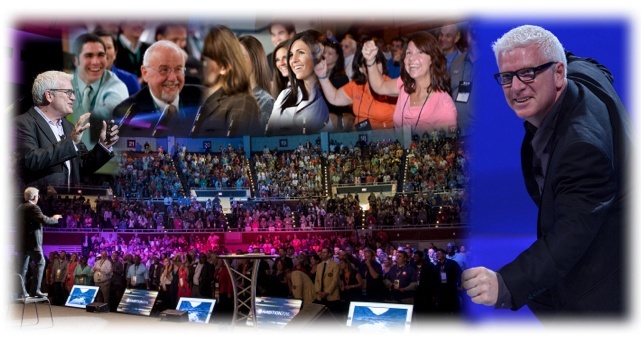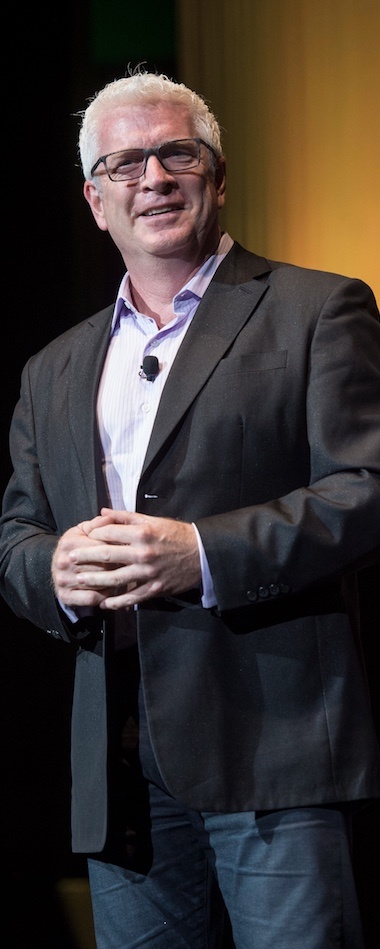


Teams rarely fail because they aren't working hard enough. In most corporate environments, the lights stay on late, calendars are packed, and the volume of emails never tapers. Yet, many leaders find themselves facing a frustrating paradox: despite the high level of activity, progress has stalled. The collective energy of the office feels heavy, and the sharp focus that once defined the organization has begun to blur into a haze of just getting through the week.
To break the cycle of stagnation, organizations need a different lever. They need a shift in mindset, a transition from a culture of effort to a culture of execution. This is where a sports keynote speaker provides a unique advantage. By drawing on the high-stakes, high-precision world of elite athletics, these speakers offer a framework for performance that is often missing from traditional business consulting.
Why Traditional Motivation Often Fades?
A professional team doesn't need to be told to care about their work; they already do. What they need is a method for maintaining that care when the pressure is mounting and the deadlines are tight. Generic inspiration falls short because it doesn't account for the grit required to perform when things go wrong.
A sports keynote speaker brings a level of lived credibility to the stage. They don't just talk about overcoming obstacles as a theoretical concept; they speak from the perspective of someone who has had to perform in front of the world, where the margin for error was measured in milliseconds. This difference in perspective transforms a speech into a performance blueprint. When a speaker shares lessons from the arena, the audience listens differently. The parallels between a high-stakes race and a high-stakes sales quarter become undeniable.
High-Performance Strategies from Vince Poscente
Not all speakers are created equal. While many can tell a compelling story, few can translate that story into a repeatable system for a business audience. Vince Poscente stands out in this space because his message is rooted in the extreme world of Olympic speed skiing, a sport where focus isn't just a strategy; it's a survival mechanism.
Vince Poscente teaches teams how to find alignment within that blur. By simplifying the path to an objective, he helps teams move past the friction of daily operations and toward the clarity of elite execution.
The core of this approach is the realization that speed requires more than just moving fast. It requires a mental discipline that allows an individual to remain calm while the environment around them accelerates. For a leadership team or a sales force, this means learning how to make faster, more confident decisions without sacrificing precision.
The Bridge Between Athletics and the Boardroom
A sports keynote speaker helps an organization bridge this gap by highlighting four key areas of performance:
1. Controlled Execution Under Pressure
In a laboratory environment, most people can perform their jobs perfectly. But a boardroom during a hostile takeover or a sales floor during a market downturn is not a laboratory. Athletes are trained to normalize pressure. They learn to view the adrenaline spike not as a sign of panic, but as a fuel for focus. Introducing this mindset to a corporate team helps reduce burnout and prevents the paralysis by analysis that often kills momentum.
2. Consistency Over Occasional Brilliance
Any team can have a hero moment where they pull off a miracle at the last minute. However, sustainable organizations are built on disciplined, repeatable actions. A sports-centric approach emphasizes the boring parts of greatness, the preparation, the recovery, and the mental rehearsals that ensure a team can perform at their best every single day, not just when they feel inspired.
3. Resilience and Rapid Recovery
In elite sports, failure is a frequent visitor. A ski tip catches an edge, a shot misses the mark, or the weather changes the conditions of the game. Athletes don't have the luxury of sulking; they must recover instantly. In business, we often let a lost contract or a bad quarter linger, affecting our performance for weeks to come. A sports keynote speaker provides tools for resetting the mind, allowing teams to move from a setback to the next opportunity without carrying the weight of the past.
4. Aligning Individual Roles with the Win
In a relay race, the fastest runners in the world will lose if the baton is dropped. This illustrates the importance of the hand-off, the moments of collaboration between departments. A sports mindset helps individuals see that their personal stats matter less than the team’s ultimate objective. It fosters a culture where accountability is shared rather than siloed.
Shifting from an Effort-Driven to a Results-Driven Culture
Many organizations suffer from Effort Fatigue. This happens when employees feel that they are working at 100% capacity but aren't seeing the needle move. It is a disheartening state that leads to high turnover and low morale.
The intervention of a sports keynote speaker like Vince Poscente helps shift the internal narrative. Instead of rewarding the number of hours spent at a desk, the focus shifts to the quality of the output and the efficiency of the process. When a team adopts an Olympic-sized mindset, they begin to audit its own behaviors. They start asking: "Is this meeting helping us win? Is this process slowing down our execution? Am I focused on the target, or am I just looking at the snow?"
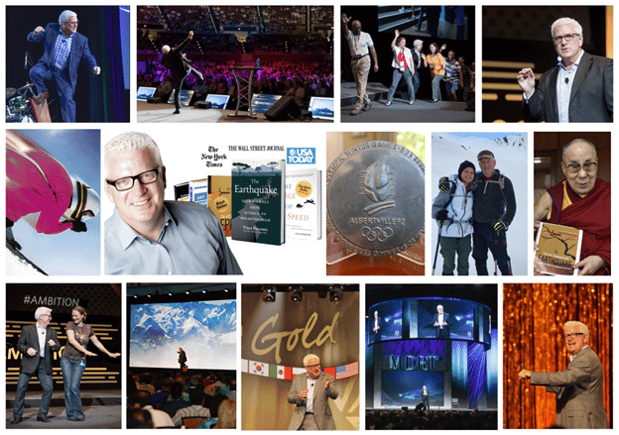
This shift is not about working harder. It is about working with a level of intentionality that eliminates wasted energy. It’s about finding the line on the mountain that leads to the fastest time with the least amount of resistance.
When Is the Right Time for a Keynote?
A high-performance keynote is a strategic investment, and timing is critical for maximum impact. Organizations should consider this type of engagement when:
- A major transition is looming: Whether it's a merger or a shift in market strategy, teams need a mental anchor to keep them steady through the change.
- The Mid-Year Slump: When the initial excitement of the year's goals has worn off, and the finish line is still months away.
- High-Pressure Environments: When a team is facing an uphill battle against competitors and needs to sharpen its edge.
Conclusion
The ultimate goal of bringing in a sports keynote speaker is not to have a great one-hour session; it is to spark a long-term transformation. The lessons of discipline, focus, and speed must be integrated into the daily workflow. When a team learns to think like an elite athlete, they don't just see a temporary boost in energy; they see a permanent shift in their capacity to handle challenges.
If your organization is ready to move past the big blur and achieve elite-level execution, it’s time to bring a new perspective to your next event. Discover how the principles of Olympic speed and mental agility can transform your results. Reach out today to see how a tailored keynote can provide the lasting spark your team needs to reach the podium.